
Slab Leaks in Downtown & Atlantic Ave: what to know
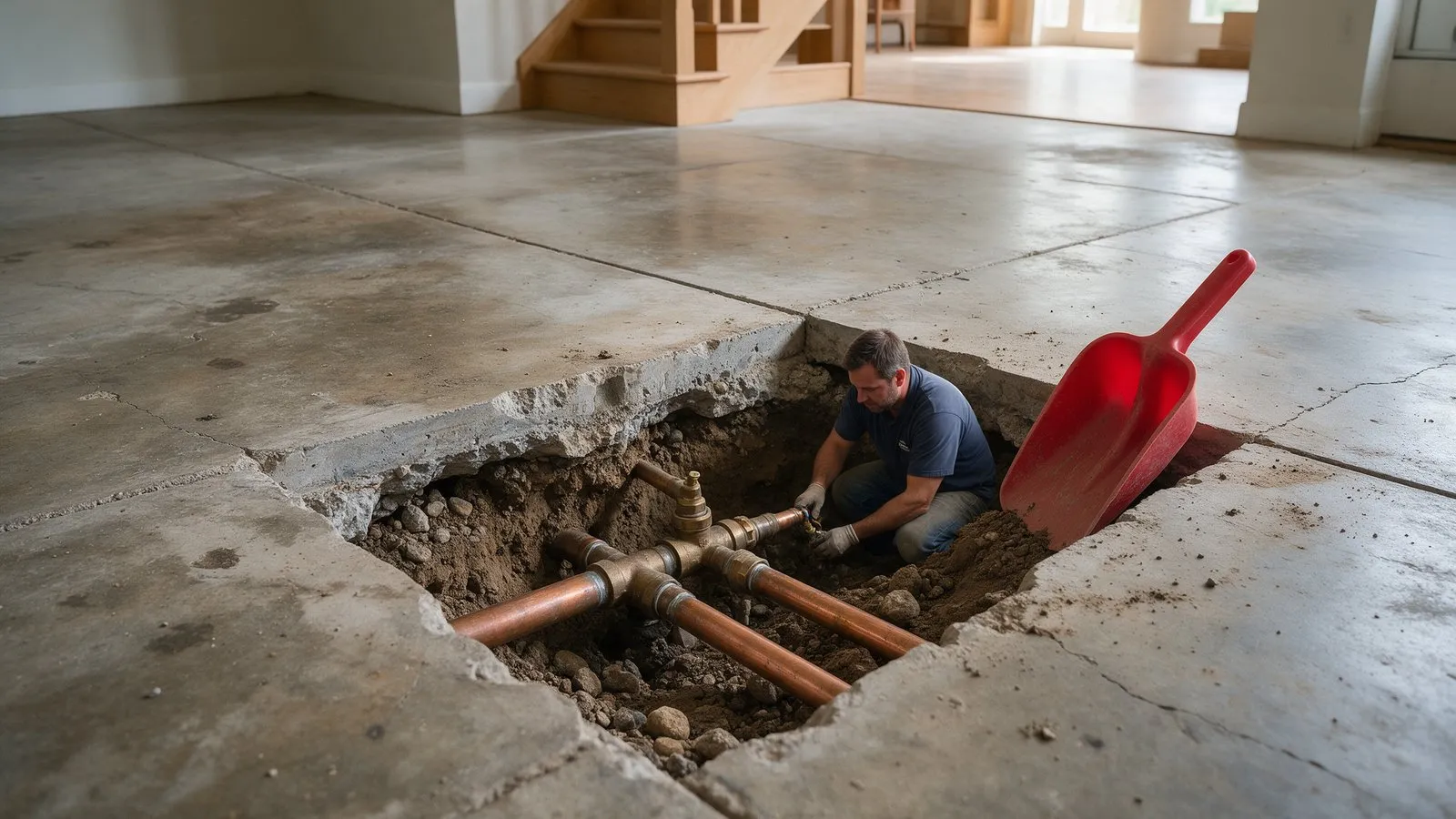
Downtown has two kinds of slab leak homes. Mid-century block houses from the 1950s and 1960s often have copper laid directly in or under the slab, and many still have original terrazzo floors that owners do not want cut. Newer infill homes have newer pipe, but a nail or a poorly supported fitting can still leak under the floor.
Where the floor is something you want to keep, a reroute is usually the first option discussed. The plumber abandons the leaking line and runs a new one through walls or the attic. Where a single leak is in an easy spot, a direct repair through a small opening can be faster and cheaper.
For warning signs and how the work is done, see our slab leak repair guide, or see all plumbing help in Downtown Delray Beach & Atlantic Avenue.
Before the plumber arrives
- Tell the plumber what flooring is over the suspected area and whether replacement pieces are available.
- Shut off the main if the meter shows a fast leak, and turn off the water heater if it is a hot line.
- Move rugs and furniture away from warm or damp spots so the leak can be traced.
Slab Leaks FAQs: Downtown & Atlantic Ave
Can a slab leak be fixed without cutting my terrazzo floor?
Often, yes. A reroute replaces the leaking section with new pipe run through the walls or attic, so the floor stays intact. The plumber will confirm whether the layout of the house allows it.
How do I know if a leak is under the slab or in a wall?
Leak detection separates the two. Pressure tests on individual lines and acoustic listening on the floor show whether water is escaping under the slab or somewhere a wall can be opened instead.