
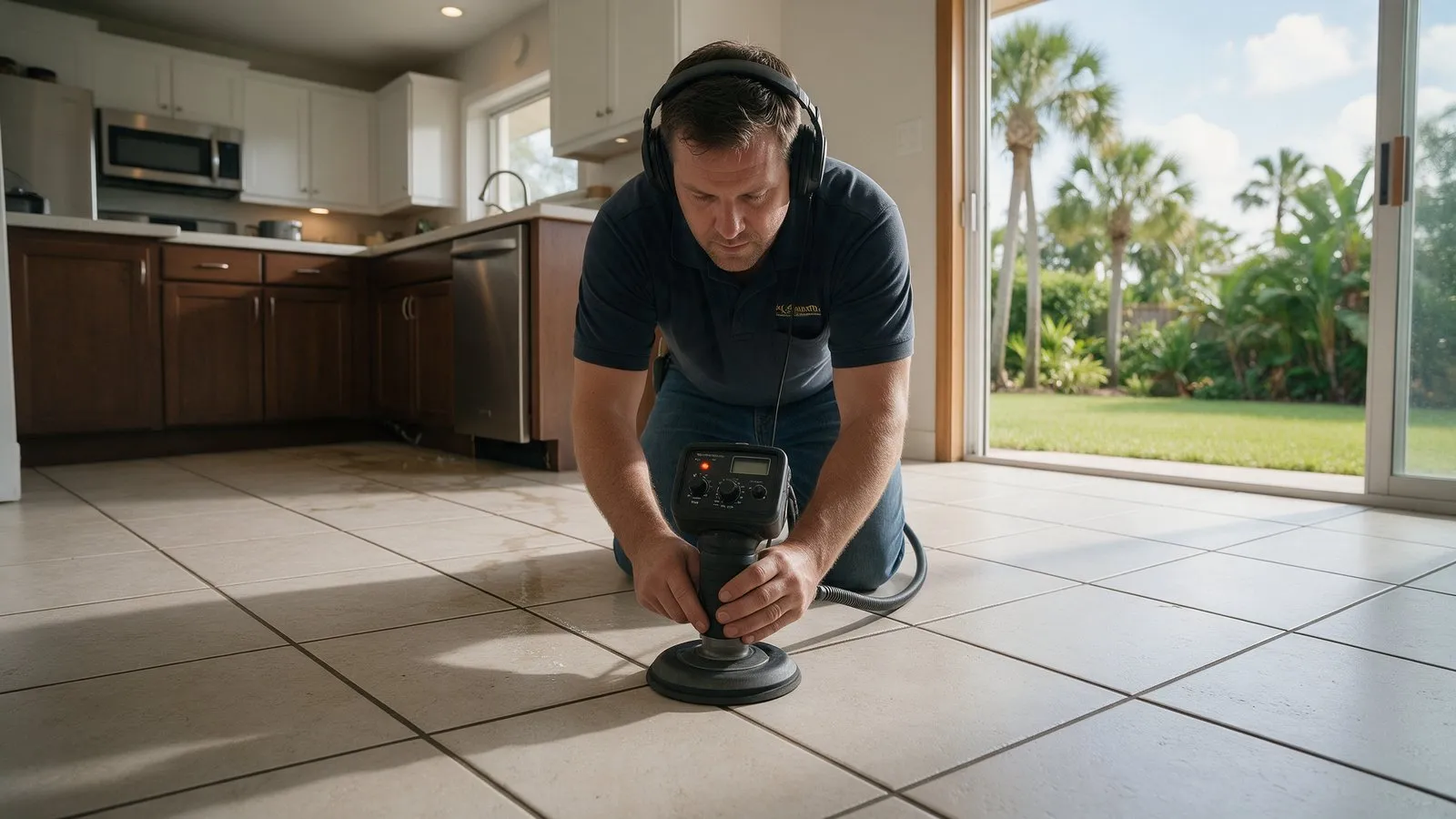
Leak Detection in Downtown & Atlantic Ave: what to know
Houses in Del Ida Park, the Marina district, Lake Ida and Osceola Park were built over several decades, so one street can mix 1930s cottages, 1950s block homes and new infill. That matters for leak detection, because the pipe material changes from house to house. Galvanized steel rusts from the inside and leaks at threaded joints, while older copper tends to pinhole along runs that sit in walls or under the floor.
Downtown homes are on Delray Beach city water, and the meter box is usually at the front of the lot near the sidewalk. Watching that meter with every fixture off is the quickest way to confirm a leak before anyone opens a wall, and it tells the plumber whether to start inside the house or on the line running out to the street.
For warning signs and how the work is done, see our leak detection guide, or see all plumbing help in Downtown Delray Beach & Atlantic Avenue.
Before the plumber arrives
- Find the meter box near the sidewalk and note whether the small leak indicator spins with everything off.
- If the house has been added onto, tell the plumber which parts are original, since old and new pipe often meet at the addition.
- Clear access to the water heater, the main shut-off and any crawl space hatch in raised cottages.
Leak Detection FAQs: Downtown & Atlantic Ave
My downtown cottage is raised. Is leak detection different?
Often it is easier. In a raised house the supply lines run in the crawl space instead of under a slab, so a plumber can usually see or reach the leaking section once it is narrowed down, with no floor to break.
Can a leak in an Atlantic Avenue storefront be found without closing the business?
Usually. Meter tests and acoustic or thermal checks can be done around business hours, and any opening is kept small. Ask the plumber about scheduling before or after opening time.